
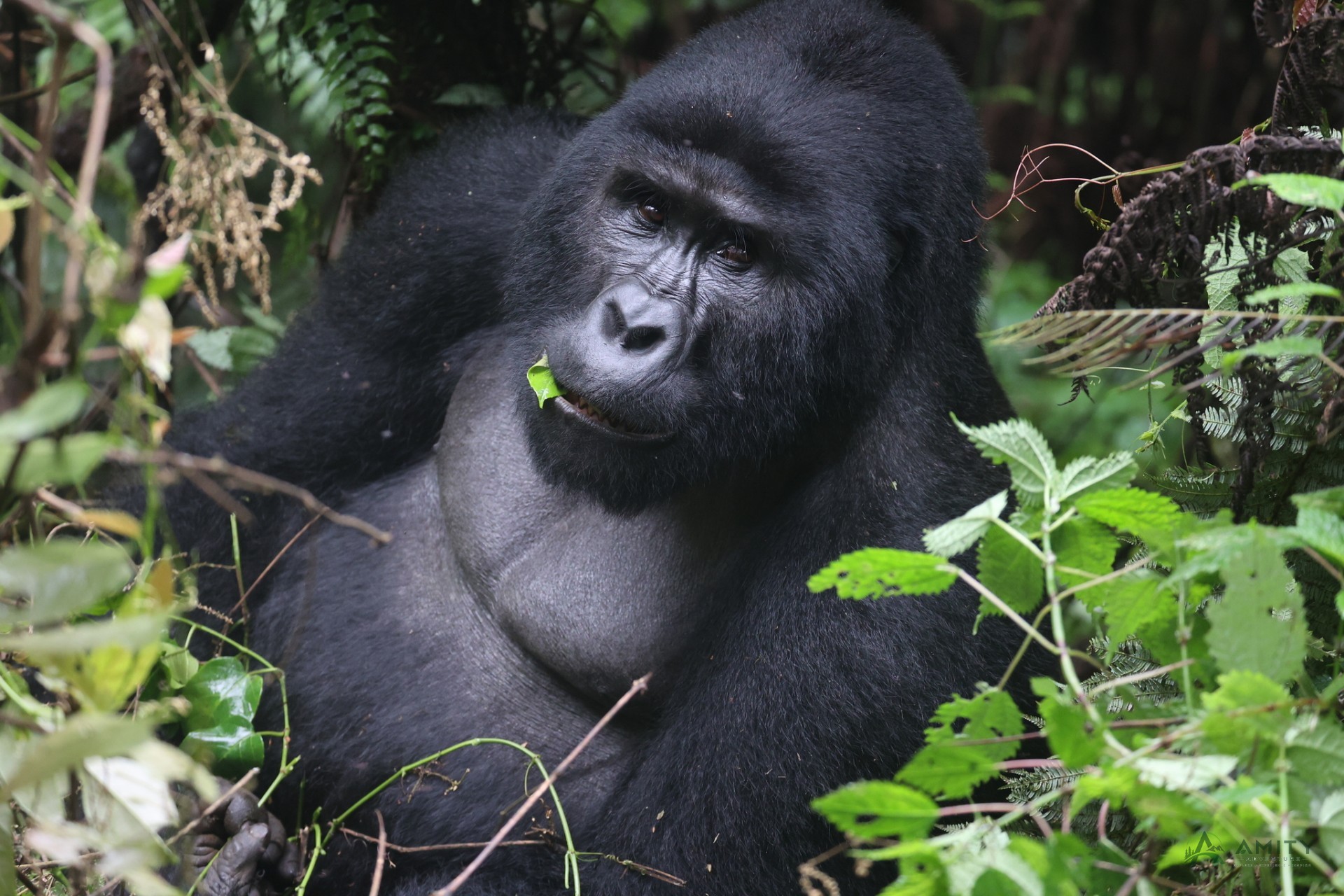
Gorilla & Chimpanzee Trekking
Mountain gorillas in Rwanda and Uganda, and chimpanzees in the forest



Scroll
Gorilla & Chimpanzee Trekking
Mountain gorillas in Rwanda and Uganda, and chimpanzees in the forest
Overview
Mountain gorillas live in only two places: the Virunga volcanoes on the borders of Rwanda, Uganda and the Democratic Republic of the Congo, and the Bwindi Impenetrable Forest in Uganda. A small number of gorilla families are used to people, and a permit lets you spend one hour with one of them.
It is a short visit, but most people say it is the highlight of their time in Africa. This page covers where to go, how a trek works, permits and what to bring.
Where to go
Volcanoes National Park, Rwanda
About two and a half hours by road from Kigali, with good lodges and short transfers. Add golden monkey tracking, a hike to the grave of Dian Fossey, Lake Kivu or a Big 5 safari in Akagera. See Volcanoes National Park and Rwanda.
Bwindi Impenetrable Forest, Uganda
Steep, thick rainforest with the largest number of habituated gorilla families, split into four sectors: Buhoma, Ruhija, Rushaga and Nkuringo. See Bwindi.
Chimpanzees
Kibale Forest in Uganda is the best-known place for chimpanzee tracking. Nyungwe in Rwanda and Mahale and Gombe in Tanzania also have chimps. See Kibale.
How a trek day works
- Briefing. Meet the rangers at park headquarters early in the morning. Each group is matched to a gorilla family, partly based on fitness.
- The walk. Trackers go ahead to find the family. Reaching them can take from under an hour to several hours over steep, muddy ground.
- The hour. Groups are limited to eight visitors. You stay with the gorillas for one hour, keeping a distance of about seven metres.
- Return. Walk back to the start, where you receive a certificate.
Permits
Every trek needs a permit, bought in advance for a fixed date. At the time of writing, a permit costs USD 1,500 per person in Rwanda and USD 800 per person in Uganda for foreign visitors; we confirm the current price when you book. Permits are limited, so book several months ahead for June to September.
Rules and fitness
- The minimum age for gorilla trekking is 15.
- You can't trek if you have a cold or other infection, as gorillas catch human illnesses.
- No flash photography, and no eating near the gorillas.
- Treks are at 2,000 to 3,000 m. You need reasonable fitness, but a porter and a walking stick make a big difference. Hiring a local porter also supports the community.
What to bring
- A waterproof jacket and comfortable walking boots.
- Long trousers tucked into socks, and gardening gloves for nettles and vines.
- Layers, water, snacks and a small dry bag for your camera.
Best time to go
Treks run all year. The dry seasons from June to September and December to February make the trails easier, but rain can fall at any time in the forest.
How long you need
Three or four days covers one trek. Five to nine days lets you add chimpanzees, another trek or a savannah safari. Many travellers combine gorillas with the Serengeti or the Masai Mara; see Kenya and Tanzania safaris.
Get a free tour quote
Tailor-made itinerary, free of charge
Local experts who know the area
No payment until you are happy
Effortless from first message to final sundowner
How it works
Planning a safari or a city escape should feel exciting, not exhausting. Here is how our experts make it simple.
Share your dream
Tell us your dates, interests and budget for your African escape — in a quick message.
We craft your journey
A dedicated local travel designer hand-builds a tailor-made itinerary, just for you.
Refine & confirm
Tweak every detail until it is perfect, then confirm in minutes with secure online payment.
Explore with confidence
Travel with 24/7 concierge support by WhatsApp, phone and email, every step of the way.

Let us plan your dream African journey for 2026/27
Enquire now and a local travel expert will get back to you — usually within minutes, 24/7.